
Pool Plastering Houston TX | JR Pool Plastering & Texas Gunite
Pool plastering in Houston TX involves applying a durable, watertight finish to your pool’s interior shell using materials like traditional marcite, quartz, or pebble blends. Professional the plaster finish typically lasts 10-15 years when done correctly, with proper surface preparation, bond coat application, and curing—critical factors in Houston’s clay soil and extreme heat. Whether you’re resurfacing an aging pool or repairing structural damage, the right plaster finish protects your investment and transforms your backyard.
Why Pool Plastering Matters for Houston Pool Owners
Your pool’s plaster is the frontline defense against leaks, stains, and structural deterioration. In Houston’s unique environment—clay soil that shifts, scorching summers, and mineral-heavy water—choosing the right finish and installer isn’t optional.
We’ve replastered pools that were drained and cracking in the August heat. Timing the cure right is everything in Houston. Rush the process or skip proper bonding, and you’ll see spider-web cracks within months. A good plaster job lasts 10-15 years; a rushed one starts staining in two.
The clay soil out here shifts constantly. That’s why proper bonding and prep matter more than the finish color. If your contractor doesn’t acid-wash the shell, remove all old plaster down to gunite, and check for structural cracks, you’re building on a weak foundation.
According to the CDC’s pool water quality guidelines, properly finished pool surfaces contribute directly to water chemistry stability and swimmer safety. Deteriorating plaster increases surface area for algae and bacteria, making sanitation harder.
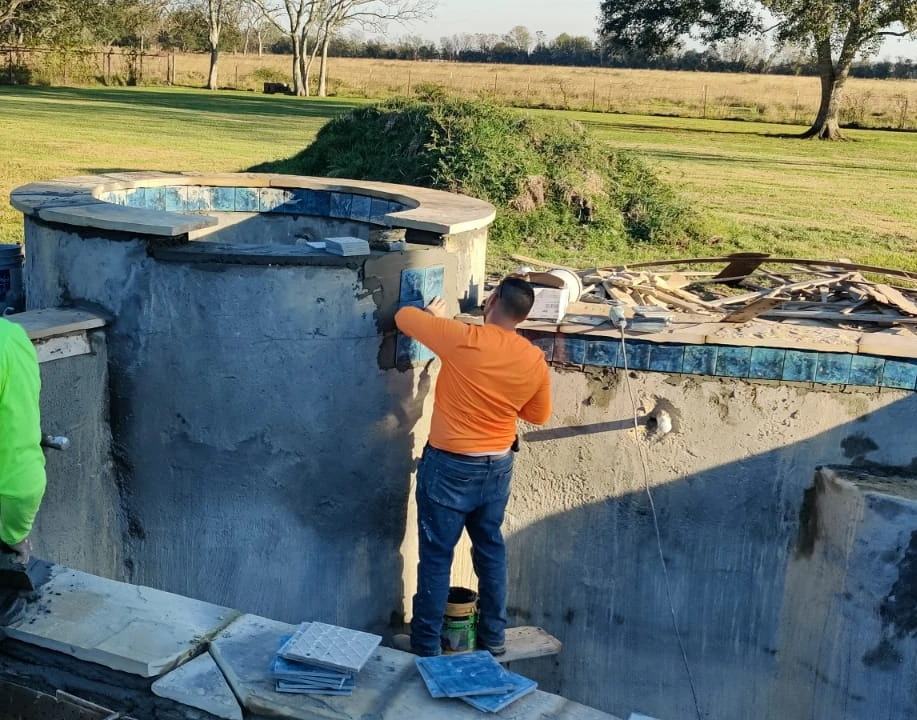
Restore your pool with Pool Plastering Houston TX by JR Pool Plastering & Texas Gunite.
What Is Pool Plastering and How Does It Work?
the plaster finish is the process of applying a cement-based finish over your pool’s gunite or concrete shell to create a smooth, waterproof surface. The plaster bonds directly to the underlying structure, sealing pores and forming a protective barrier.
Traditional white plaster (marcite) mixes white cement, marble dust, and water. Modern alternatives include quartz and pebble finishes that add aggregate for texture and durability. Each material requires specific trowel techniques, curing temperatures, and water chemistry during startup.
Here’s what 20 years around Houston pools teaches you: the finish is only as good as the substrate. Before any plaster touches your pool, crews must sandblast or chip-hammer away old material, repair cracks with hydraulic cement, and apply a bond coat. That bond coat—a cement slurry—is what locks new plaster to old gunite.
The actual plastering happens fast. A crew of four to six finishers works in sections, troweling material from the deep end up. They have roughly 90 minutes before the plaster begins its initial set. Smooth troweling eliminates air pockets and creates the glassy finish you want.
Curing is where most DIY attempts and budget contractors fail. Fresh plaster needs 28 days to fully cure, but the critical first week determines long-term success. Water chemistry must stay balanced—pH between 7.2 and 7.6, alkalinity 80-120 ppm—or the finish etches permanently.
Types of Pool Plaster Finishes Available in Houston
Standard White Plaster (Marcite): The most affordable option, lasting 7-10 years in Houston’s conditions. It’s prone to staining from our hard water but offers a classic bright appearance.
Quartz Finishes: Quartz aggregate mixed into plaster adds strength and color variation. Expect 10-12 years of service life. The quartz reflects light beautifully and resists chemical staining better than straight marcite.
Pebble Finishes: Premium choice using small stones for texture and longevity. Pebble finishes hold up to our hard water far better than white plaster. They last 15-20 years and hide calcium deposits that would show on smooth surfaces. We recommend pebble for Katy, Sugar Land, and Cypress pools where water hardness exceeds 400 ppm.
Exposed Aggregate: Similar to pebble but with larger stones and more texture. Popular for natural, resort-style pools. The rough surface isn’t for everyone—some swimmers find it abrasive—but it’s nearly indestructible.
How Do You Know When Your Pool Needs Replastering?
Your pool tells you when it’s time. Run your hand along the waterline tile—if the plaster feels rough like sandpaper or you see dark stains that won’t brush away, you’re overdue.
Most Houston pools need replastering every 10-15 years, though some show wear sooner. Look for these warning signs:
- Rough texture: Plaster erodes over time, exposing aggregate underneath. If it catches your swimsuit or scratches feet, the surface is compromised.
- Persistent stains: Gray, brown, or purple discoloration that chemicals won’t remove indicates metal leaching or organic growth embedded in porous plaster.
- Visible cracks: Spider-web patterns (checking) or structural cracks that telegraph through from the gunite shell.
- Frequent water loss: While most pool “leaks” people panic about are just evaporation—Houston summers pull over a quarter inch a day—consistent water loss despite normal evaporation rates suggests plaster failure.
- Constantly cloudy water: Deteriorating plaster sheds particles and disrupts water chemistry, making it impossible to maintain clarity.
Cheap plaster is the most expensive thing you can buy for a pool. You’ll pay for replastering twice—once for the budget job, again in three years when it fails.
The Association of Pool & Spa Professionals recommends professional surface inspection every five years for residential pools. Commercial facilities in The Woodlands, Pearland, and throughout Houston should inspect annually due to higher bather loads and chemical usage.
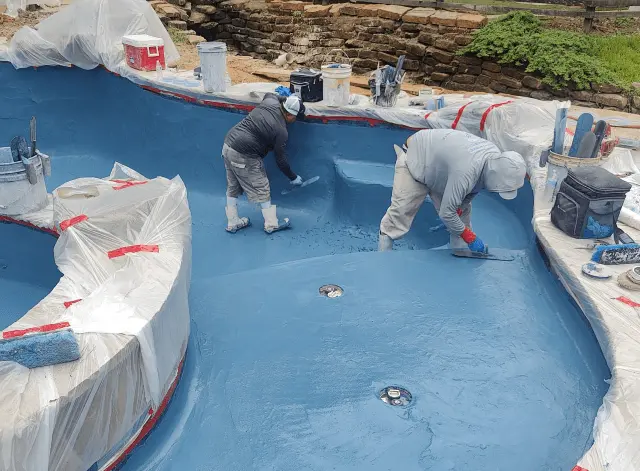
Trust JR Pool Plastering & Texas Gunite for expert pool plastering.
The Pool Replastering Process: What to Expect
Professional replastering takes 7-10 days from drain to swim-ready, though weather and material choice affect timing. Understanding each phase helps you plan and spot corners being cut.
Step 1: Draining and Surface Preparation
Contractors drain your pool completely and pressure-wash to remove debris. They’ll inspect the shell for structural issues—cracks wider than hairline, bond beam separation, or plumbing leaks that must be fixed before new plaster goes on.
Old plaster removal happens via sandblasting, chipping, or hydro-demolition. The goal: expose clean gunite with enough texture (called “tooth”) for the new plaster to grip. Smooth gunite won’t bond properly.
Step 2: Repairs and Tile Work
Any shell cracks get routed out and filled with hydraulic cement or epoxy. If you’re upgrading tile or coping, it happens now. New waterline tile refreshes the look and provides a clean edge for plaster termination.
This is when you’ll discuss finish options with your pool plastering contractor. Color samples look different dry versus submerged, so ask to see photos of completed pools, not just dry chips.
Step 3: Bond Coat and Plaster Application
On plaster day, crews arrive early—usually 6 or 7 a.m.—to beat the heat. They spray or brush a bond coat (cement slurry) onto the damp shell, then immediately follow with plaster.
Material arrives by truck already mixed. The crew works in synchronized sections, troweling plaster from deep end to shallow, eliminating air pockets and creating uniform thickness (typically 3/8 to 1/2 inch).
For a standard residential pool, application takes 4-6 hours. Pebble finishes take longer because crews must expose the aggregate by washing before it sets fully.
Step 4: Filling and Startup Chemistry
Water filling begins within hours of finishing. Never let fresh plaster sit empty—it’ll crack. Fill continuously using a hose with a clean sock filter to catch debris.
Startup chemistry is critical. For the first 28 days, you’re managing pH and alkalinity daily, brushing twice daily to remove plaster dust, and avoiding shock treatments. Many warranties void if you don’t follow the curing protocol exactly.
Most pool “disasters” we see stem from homeowners adding too much acid too soon or heating the pool during curing. Patience pays.
Why Houston’s Climate Demands Expert Pool Plastering
Houston isn’t kind to pools. The combination of clay soil, extreme heat, and hard water creates challenges that generic pool plastering techniques can’t handle.
Clay soil expands and contracts with moisture. A pool shell moves—not much, but enough to crack plaster that isn’t properly bonded. We’ve seen pools in Cypress and Katy with entire sections of plaster delaminating because installers skipped the bond coat or applied it over dusty, dry gunite.
Summer heat accelerates plaster curing—sometimes too fast. If fresh plaster dries before it properly hydrates, you get shrinkage cracks and weak spots. That’s why experienced Houston contractors spray a fine mist over curing plaster or plaster during cooler morning hours.
Our water is notoriously hard. The Texas Commission on Environmental Quality reports that Houston-area water hardness ranges from 120 to over 400 ppm calcium carbonate depending on your source. Hard water etches white plaster and leaves scale on surfaces. Pebble and quartz finishes tolerate this better, which is why we recommend them for most Houston-area pools.
According to data from the National Centers for Environmental Information, Houston experiences an average of 104 days per year with temperatures above 90°F. That heat accelerates water evaporation and chemical consumption, putting extra stress on pool surfaces.
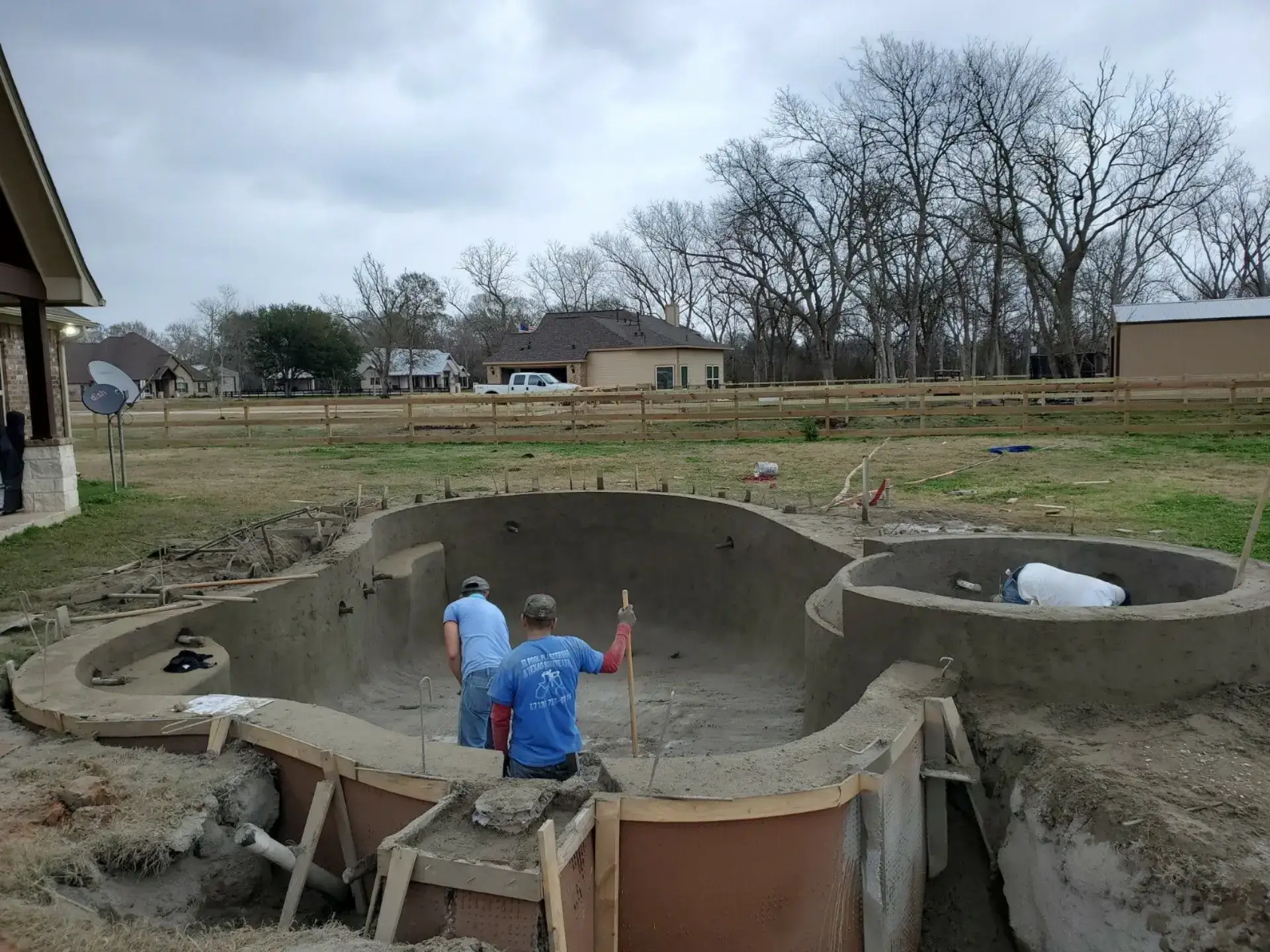
Give your pool a smooth new finish with Pool Plastering Houston TX.
the plaster finish Cost Factors in Houston TX
Pool replastering in Houston typically costs $4 to $9 per square foot depending on finish type, pool size, and site access. A standard 400-square-foot residential pool runs $3,500 to $6,000 for white plaster, $5,000 to $8,000 for quartz, and $7,000 to $12,000 for premium pebble.
Several factors affect your final price:
- Pool size and shape: Larger pools and complex shapes (beach entries, spas, vanishing edges) require more material and labor.
- Finish material: White plaster is cheapest. Colored quartz adds 30-50%. Pebble finishes cost 70-100% more than basic plaster but last nearly twice as long.
- Condition of the shell: Extensive crack repair, failed bond beams, or plumbing leaks add to project cost. Always get a post-drain inspection before final pricing.
- Tile and coping upgrades: Replacing waterline tile or coping adds $15-30 per linear foot but dramatically improves appearance.
- Access and disposal: Narrow gates, long hose runs, or difficult debris removal increase labor costs.
Resurfacing beats replacing nine times out of ten. If the shell’s sound, you’re throwing money away tearing it out. We evaluate every pool’s structure before recommending replastering or full renovation.
Get at least three quotes for pool resurfacing in Houston. Beware of outliers—extremely low bids usually mean shortcuts or hidden costs. Ask specifically about surface prep, bond coat, warranty terms, and startup chemistry support.
How to Choose a Pool Plastering Contractor in Houston
Not all pool contractors are created equal. Plastering is a specialized trade requiring experience, proper equipment, and an understanding of local conditions.
Check licensing and insurance: Texas doesn’t require pool contractors to hold state licenses, but reputable companies carry general liability and workers’ compensation insurance. Always verify coverage before signing.
Ask about their crew: Will the company’s own employees do the work, or will they subcontract? Subcontractors vary in quality. We use the same core crew that’s been with us for years—that consistency shows in the finish.
Request references and photos: Any contractor worth hiring has a portfolio of completed projects in your area. Ask for addresses (with homeowner permission) so you can see two- or three-year-old work, not just fresh installs.
Understand the warranty: Most plaster warranties cover material defects for one to three years but exclude water chemistry damage, structural issues, or normal wear. Read the fine print. Some contractors offer extended warranties on premium finishes.
Discuss the startup process: A quality contractor provides detailed startup instructions and checks water chemistry after filling. If they hand you a bag of chemicals and leave, that’s a red flag.
Maintaining Your New Pool Plaster
Proper maintenance extends plaster life and keeps your pool looking new. The first 28 days set the tone for the next decade.
During the curing period, brush the entire pool surface twice daily with a nylon brush (never wire). This removes plaster dust and prevents mottling. Test water chemistry daily and adjust pH and alkalinity as needed—your contractor should provide target ranges.
Don’t run the heater during curing. Heat accelerates chemical reactions that can etch fresh plaster. Keep water temperature below 85°F for the first month.
After curing, maintain balanced water chemistry religiously. Target pH 7.4-7.6, total alkalinity 80-120 ppm, and calcium hardness 200-400 ppm. Low pH etches plaster. High pH causes scaling. Both shorten surface life.
Brush weekly even when the pool looks clean. Brushing prevents algae from taking hold in the plaster’s microscopic pores and distributes chemicals evenly.
Most stains develop from metals (iron, copper, manganese) in fill water or corroded equipment. Use a pre-filter when adding large amounts of water, and replace aging heaters or copper plumbing before they leach metals into your pool.
Schedule professional pool maintenance service if you notice persistent staining, rough texture, or chemistry problems you can’t resolve. Catching issues early often means simple fixes rather than full replastering.
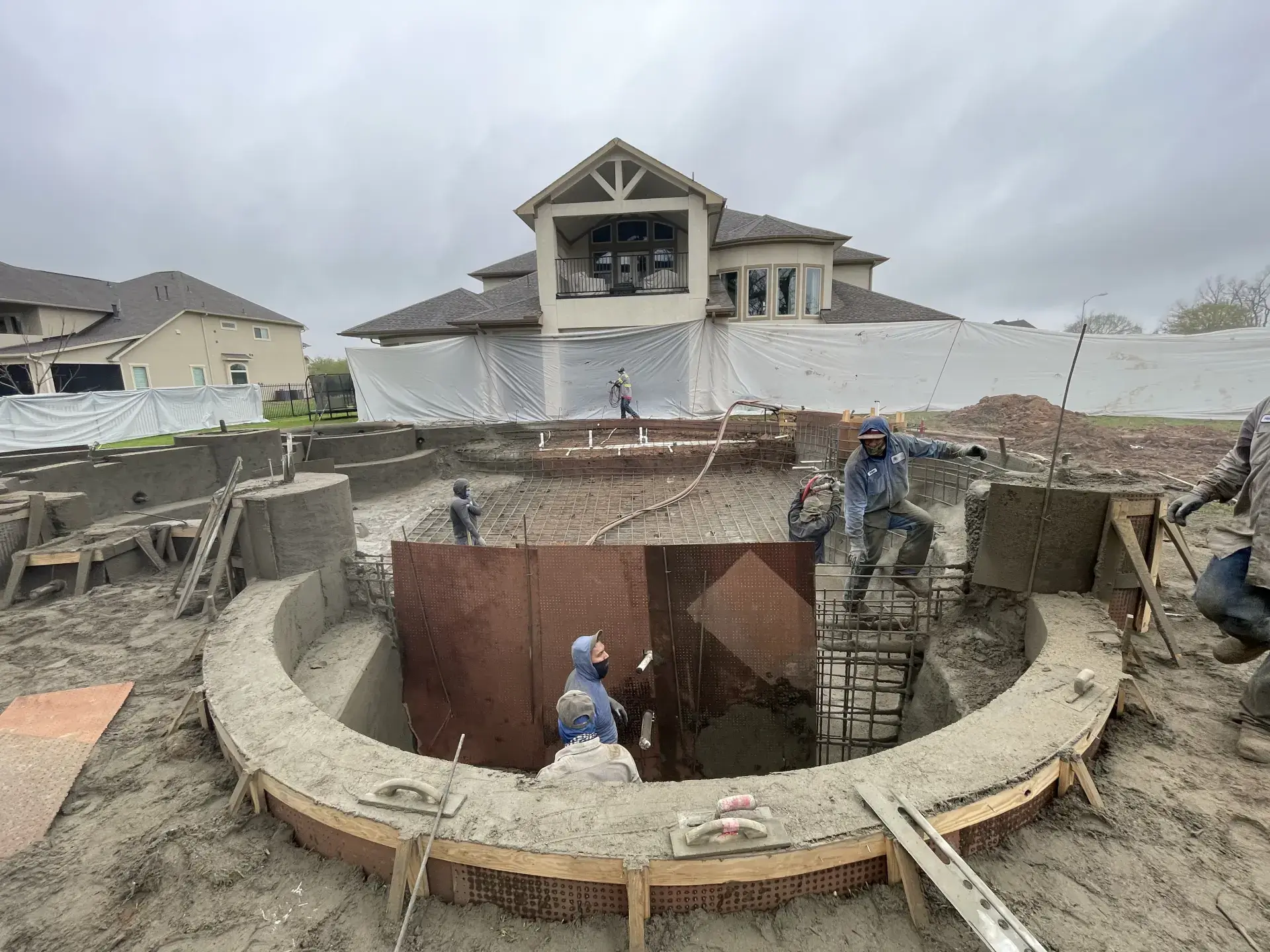
Enhance your backyard with professional Pool Plastering Houston TX.
Common Pool Plastering Problems and Solutions
Even well-installed plaster can develop issues. Recognizing problems early saves money and sometimes salvages a finish that seems ruined.
Discoloration and Staining
Gray or purple stains usually indicate manganese in the water. Brown or rust stains mean iron. Copper creates blue-green stains. Metal stains respond to ascorbic acid treatments or chelating agents. Organic stains (leaves, algae) typically need shock treatment and brushing.
Mottling—uneven color that looks like clouds—develops from inconsistent troweling, varying water chemistry during curing, or calcium nodules in the plaster mix. It’s cosmetic, not structural, but it bothers many pool owners. Some mottling fades over the first year.
Etching and Scaling
Etching appears as dull, rough patches where acid has dissolved the plaster’s surface. It’s caused by sustained low pH or aggressive water (low alkalinity and calcium). Mild etching sometimes polishes out. Severe etching requires replastering.
Scaling is the opposite—calcium deposits forming white or gray crust. It stems from high pH, high calcium hardness, or high alkalinity. Scale removes with pumice stones, acid washing, or professional descaling treatments.
Cracking and Delamination
Hairline cracks (checking) are common in white plaster and usually don’t affect function. Structural cracks that run through the shell need immediate attention to prevent leaks.
Delamination—plaster separating from the gunite—shows as hollow spots or sections that pop off. It’s caused by poor bonding, application over a dry shell, or structural movement. Delaminated areas must be removed and replastered.
Pool Resurfacing vs. Full Renovation: Which Do You Need?
Resurfacing replaces only the plaster finish. Full renovation rebuilds or replaces pool components—plumbing, equipment, decking, tile, coping, and sometimes the shell itself.
If your pool’s structure is sound—no major cracks, functional plumbing, and adequate equipment—resurfacing is the cost-effective choice. You’ll get a like-new appearance for a fraction of renovation cost.
Consider full pool renovation if you’re dealing with multiple problems: outdated equipment, leaking plumbing, cracked coping, or a dated design you want to modernize. Renovation lets you add features like benches, LED lighting, water features, or expand the pool footprint.
We typically recommend renovation when pools are 25-plus years old and haven’t been updated. At that age, plumbing and equipment are near end-of-life anyway, so you might as well upgrade everything together.
Commercial Pool Plastering in Houston
Commercial pools—apartment complexes, hotels, municipal facilities, HOAs—face different challenges than residential pools. Higher bather loads mean more chemical consumption, greater wear on surfaces, and stricter health department oversight.
Commercial pool plaster must meet specific standards for slip resistance, durability, and chemical resistance. Many municipalities require NSF/ANSI 50 certified materials for public pools. Pebble and exposed aggregate finishes are popular for commercial applications because they withstand heavy use and provide excellent traction.
Downtime is a bigger concern. Residential pools can close for a week; residential pools lose revenue or face resident complaints. We schedule commercial replastering during off-seasons when possible and coordinate with property managers to minimize impact.
Startup chemistry is even more critical in commercial settings. State and local health codes mandate specific water quality parameters, and pools must pass inspection before reopening. We work directly with commercial pool operators to ensure compliant startups and provide documentation for health department files.
The Value of Professional the plaster finish
DIY pool plastering isn’t realistic for most homeowners. The materials are specialized, the window for application is narrow, and mistakes are expensive to fix.
Professional crews bring experience, equipment, and accountability. They know how Houston’s climate affects curing. They’ve seen what works and what fails in our clay soil and hard water. They carry insurance that protects you if something goes wrong.
A pool is likely the second-largest investment in your property after the house itself. Protecting that investment with quality craftsmanship and materials is common sense. We’ve seen too many homeowners try to save a few hundred dollars, only to spend thousands more fixing botched plaster jobs.
When you’re ready to replaster, ask questions. Understand what you’re buying. Get everything in writing—material specs, warranty terms, payment schedule, and timeline. A contractor who’s reluctant to document their work isn’t one you want in your backyard.
Why Choose JR Pool Plastering for Your Houston Pool
We’ve been replastering Houston pools since 2003, working in every corner of the metro—from inner-loop neighborhoods to Sugar Land, Katy, Cypress, The Woodlands, and Pearland. That experience means we understand local conditions and how to build finishes that last.
Our crews are experienced employees, not day laborers or subcontractors. The same team that preps your pool applies the plaster and manages startup. That continuity ensures quality and accountability.
We use premium materials from trusted manufacturers. Our pebble and quartz finishes come with manufacturer warranties that we stand behind. We’re here if problems develop, not disappeared after collecting the final check.
Every project gets a dedicated project manager who walks you through the process, answers questions, and ensures you’re comfortable with startup procedures. We check water chemistry after filling and provide a detailed maintenance guide tailored to your finish type.
Most importantly, we’re honest about what your pool needs. If replastering isn’t the answer—if you need structural repairs or full renovation—we’ll tell you. Resurfacing beats replacing nine times out of ten, but we’ve seen that tenth time often enough to know the difference.
Ready to restore your pool’s finish? Contact JR Pool Plastering for a no-obligation inspection and quote. We’ll assess your pool’s condition, discuss finish options, and provide transparent pricing with no hidden costs.
Frequently Asked Questions
How long does pool plaster last in Houston?
Quality pool plaster typically lasts 10-15 years in Houston’s climate, though this varies by material and maintenance. White marcite plaster tends toward the lower end (7-10 years) due to our hard water and intense UV exposure. Quartz finishes last 10-12 years, while premium pebble finishes often reach 15-20 years. Proper water chemistry and regular maintenance significantly extend plaster life, while neglect or chemical imbalances can cause premature failure in as little as three to five years.
How much does pool replastering cost in Houston TX?
Pool replastering costs in Houston range from $4 to $9 per square foot depending on material choice and pool condition. A typical 400-square-foot residential pool costs $3,500-$6,000 for white plaster, $5,000-$8,000 for quartz finishes, and $7,000-$12,000 for pebble or exposed aggregate. Additional costs include tile replacement ($15-$30 per linear foot), structural repairs, and equipment upgrades. Always get post-drain inspection quotes, as hidden damage affects final pricing. Premium materials cost more upfront but last longer, making them often more economical over time.
Can I swim in my pool immediately after plastering?
No, you cannot swim immediately after the plaster finish. Fresh plaster requires a 7-10 day curing period before swimming is safe, and full curing takes 28 days. Water filling begins within hours of plastering to prevent cracking, but you’ll need to brush the pool twice daily during the first week to remove plaster dust. Water chemistry must be carefully managed during this period—improper pH or alkalinity can permanently damage the finish. Most contractors allow light swimming after one week, but avoid heavy use, heating, or chemical shock treatments during the first month.
What causes pool plaster to crack?
Pool plaster cracks develop from several causes: structural movement in the underlying gunite shell, poor bonding between plaster and substrate, application during extreme heat, insufficient curing, or dramatic pH swings. Houston’s expansive clay soil causes shells to shift slightly, which can telegraph cracks through thin or poorly bonded plaster. Hairline checking (fine spider-web cracks) is common in white plaster and typically cosmetic. Larger structural cracks require professional evaluation to determine if the issue is surface-level or indicates shell damage. Proper surface preparation and bond coat application during installation prevent most cracking issues.
How do I maintain water chemistry for new pool plaster?
New pool plaster requires careful water chemistry management during the 28-day curing period. Target pH 7.4-7.6, total alkalinity 80-120 ppm, and calcium hardness 200-400 ppm. Test daily for the first two weeks, then every other day through day 28. Brush the entire pool twice daily to remove plaster dust and prevent mottling. Don’t add shock treatments, algaecides, or run the heater during curing. Make adjustments gradually—sudden chemical swings etch or stain fresh plaster. After curing, continue weekly testing and maintain balanced chemistry to maximize plaster life. Consider professional startup service for peace of mind.
Is pebble finish better than white plaster for Houston pools?
Pebble finishes generally outperform white plaster in Houston’s conditions. Our hard water (often 300-400+ ppm calcium) causes staining and etching on smooth white plaster, while pebble’s textured surface hides mineral deposits and resists chemical damage better. Pebble finishes last 15-20 years versus 7-10 for white plaster, and they maintain appearance longer despite our intense UV exposure and high chlorine demand. The tradeoff is higher upfront cost ($7,000-$12,000 versus $3,500-$6,000 for a typical pool) and rougher texture that some swimmers find abrasive. For most Houston pools, especially those with high hardness or heavy use, pebble’s longevity justifies the premium.
{
“@context”: “https://schema.org”,
“@graph”: [
{
“@type”: “Article”,
“headline”: “Pool Plastering Houston TX | JR Pool Plastering”,
“description”: “Pool plastering Houston TX services for commercial properties. Expert repairs, renovations & maintenance. Get your free quote today from certified professionals”,
“keywords”: “pool plastering houston tx”,
“mainEntityOfPage”: “https://jrpoolplastering.com”,
“datePublished”: “2026-06-30T00:42:39.457Z”,
“dateModified”: “2026-06-30T01:15:22.049Z”,
“author”: {
“@type”: “Person”,
“name”: “Computer”
},
“publisher”: {
“@type”: “Organization”,
“name”: “JR Pools”,
“url”: “https://jrpoolplastering.com/”
}
},
{
“@type”: “FAQPage”,
“mainEntity”: [
{
“@type”: “Question”,
“name”: “How much does commercial pool plastering cost in Houston?”,
“acceptedAnswer”: {
“@type”: “Answer”,
“text”: “Commercial pool plastering in Houston typically costs between $8,000 and $25,000, depending on your pool’s size, plaster condition, and finish type. Most projects fall in the $12,000–$18,000 range. You’ll want to get quotes from local contractors since pricing varies based on whether you’re doing basic replastering or upgrading to premium finishes like aggregate or colored plaster.”
}
},
{
“@type”: “Question”,
“name”: “What is the best pool plaster finish for commercial pools?”,
“acceptedAnswer”: {
“@type”: “Answer”,
“text”: “Aggregate finishes are the best choice for commercial pools because they’re incredibly durable and resistant to chemicals and heavy use. They’re made from plaster mixed with quartz or granite, giving them superior longevity compared to standard plaster. If you’re managing a commercial facility in Houston, TX, aggregate finishes will save you money on maintenance and repairs long-term while keeping your pool looking professional and well-maintained.”
}
},
{
“@type”: “Question”,
“name”: “Why does pool plaster crack and how to prevent it?”,
“acceptedAnswer”: {
“@type”: “Answer”,
“text”: “Pool plaster cracks due to settling foundations, temperature fluctuations, and water chemistry imbalances. In Houston’s hot climate, expansion and contraction stress the surface significantly. You can prevent cracking by maintaining proper water balance, ensuring adequate drainage, and scheduling regular inspections. Professional pool plastering in Houston TX includes quality application techniques and using premium materials that withstand our intense heat. Addressing small issues early prevents costlier repairs down the road.”
}
},
{
“@type”: “Question”,
“name”: “When should commercial pools be replastered in Houston?”,
“acceptedAnswer”: {
“@type”: “Answer”,
“text”: “Commercial pools in Houston typically need replastering every 5-7 years, though it depends on water chemistry, usage, and climate conditions. Houston’s heat and humidity can accelerate wear, so you’ll want to inspect your pool’s surface regularly for cracks, staining, or rough spots. If you’re noticing these issues, it’s time to call a professional. Don’t wait too long—catching problems early can save you from costly structural damage.”
}
},
{
“@type”: “Question”,
“name”: “How long does commercial pool plastering take to complete?”,
“acceptedAnswer”: {
“@type”: “Answer”,
“text”: “Commercial pool plastering typically takes 7-14 days from start to finish, though it can vary depending on pool size and complexity. The process includes surface preparation, application, curing time, and final inspection. Here in Houston, we’ve found that larger commercial pools might need additional time for multiple coats. Weather conditions also play a role—you’ll want dry conditions for proper curing. We’ll give you a specific timeline during your initial assessment.”
}
},
{
“@type”: “Question”,
“name”: “What’s the difference between plaster and aggregate pool finishes?”,
“acceptedAnswer”: {
“@type”: “Answer”,
“text”: “Plaster is a smooth, traditional coating that’s affordable and easy to maintain, but it’ll need replastering every 7-10 years. Aggregate finishes mix plaster with stone particles or pebbles, giving you a textured, decorative surface that’s more durable and lasts 15+ years. Aggregate costs more upfront but resists algae better and feels more luxurious underfoot. For Houston homeowners, aggregate’s durability in our hot climate often makes it worth the investment.”
}
}
]
},
{
“@type”: “LocalBusiness”,
“name”: “JR Pool Plastering & Texas Gunite Ltd”,
“address”: {
“@type”: “PostalAddress”,
“streetAddress”: “6205 Brookfield Dr, Houston, TX 77085”
},
“telephone”: “(832) 305-5765”,
“url”: “https://jrpoolplastering.com/”
}
]
}
expert pool replastering services